

Wuhan Keyi Optic & Electric Technology Co., Ltd is a high-tech enterprise in Wuhan East Lake Hi-Tech Industrial Development Zone. We have a modernized manufacturing base and a high quality team; the scientific and technical personnel account 80% of the workforce, the number of senior technical staff accounts for 30%.
Over the years, our company has established partnerships with many domestic research institutes, insisting on the policy of scientific and technological innovation, customer satisfaction. Since foundation, with strict management and innovative spirit, we have successfully developed a number of advanced expertise; products include Diode-pumped laser machine, CO2 laser machine, fiber laser machine series, laser welding machine, laser cutting machine, Currently, our products have been exported to Thailand, Brazil,German,Pakistan,Korean,etc. and widely used in electronic components, manufacturing, machinery, internal combustion engines, auto parts, medicine, food, household industrial and defense industries.
Why Choose Us
1.High quality
Our products are manufactured or executed to very high standards, using the finest materials and manufacturing processes.
2.Professional team
Our professional team collaborate and communicate effectively with one another, and are committed to delivering high-quality results. They are capable of handling complex challenges and projects that require their specialized expertise and experience.
3.Long warranty
The long-term warranty is designed to give consumers more confidence that their purchases and services will continue to be valid.
4.Rich experience
Dedicated to strict quality control and attentive customer service, our experienced staff is always available to discuss your requirements and ensure complete customer satisfaction.


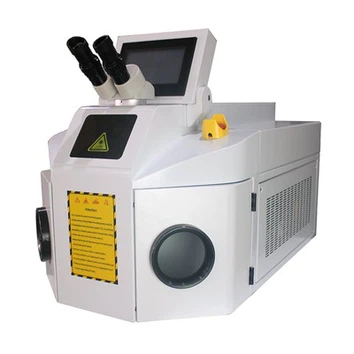


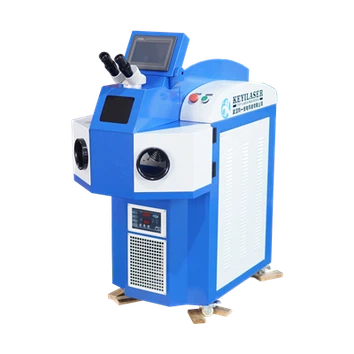


What is Jewelry Laser Welding Machine
Jewelry laser welding machine is a professional equipment for welding jewelry.Laser welding is a process that utilizes the radiant energy of a laser to achieve effective welding. The working principle is to excite a laser active medium in a specific manner (such as a mixed gas of CO2 and other gases, YAG yttrium aluminum garnet crystal, etc.). The reciprocating oscillation in the cavity forms a stimulated radiation beam. When the beam is in contact with the workpiece, its energy is absorbed by the workpiece, and welding can be performed when the temperature reaches the melting point of the material.
Benefits of Jewelry Laser Welding Machine
Precise positioning when jewels setting, the jewels in the surrounding will not be damaged during the welding process. The solder joints are fine and beautiful, without excessive post-weld treatment.
laser spot welding parameters can be adjusted in a larger range, the welding spot size can be adjusted at will to achieve a variety of welding effects.
The processing speed is fast; the thermal deformation and heat affected zone are small.
The welding point of laser welding is very small, the same color as the place where there is no welding. Comparing with ordinary welding with a black circle, laser welding effect is much more beautiful.
Environment-friendly. In the laser welding process, it is not necessary to use solder and solvent, and to clean the work-piece with chemical solvent. Therefore, there is no problem of waste disposal for laser welding.
Jewelry Laser Welding Machine Features
Energy, pulse width, frequency, spot size, etc. can be adjusted in a large range to achieve a variety of welding effects. The parameters can be adjusted by control lever in the closed-loop, which is simple and efficient.
Unique optical design, stable laser output, xenon lamp life is more than 5 million times.
Small welding spot, small heat affected area, little product deformation, but high weld strength, no pore.
Man-friendly interface, reliable performance and long service life.
24-hour continuous working capacity, stable performance, maintenance-free within 10,000 hours.
How is Jewelry Laser Welding Machine Used in Jewelry Design and Jewelry Repair

1.Jewelry design
It’s rare that jewelry is made from a single piece of metal. Instead, separate metal pieces are often intertwined or connected to complete a finished piece of jewelry. Rings, for example, often have a setting for a stone or perhaps even a metal embellishment and those must be welded to the ring itself. The weld must be reliable and, when it comes to jewelry, the seams should be undetectable.
2.Jewelry repair
While jewelry design has improved over the years, laser jewelry repair has revolutionized this aspect of the craft. Prior to lasers, a lot of repair work was impossible simply because the mechanisms to complete the repair work would have damaged the items themselves. However, with lasers, jewelers can now repair everything from sterling silver to glass pieces in costume jewelry.

Why Choose Jewelry Laser Welding Machine for Jewelry Design and Repair
While every method of welding for jewelry design and repair comes with some advantages, one method stands above the rest for its versatility, reliability, and return on investment and that method is laser welding.
● Versatility: It’s not just about applications because laser welding is an excellent option for everything, from casting and assembly to spring and chain repair, it’s also about material versatility. For example, both sterling silver and platinum are notoriously difficult to work with, unless you’re using a laser welder. .But, you don’t have to only be working with complicated metals, you can also work on other precious metals such as yellow and white gold.
● Reliability: Welds from a laser are 95% as strong as virgin meta and they’re also 260 times stronger than a soldered weld too. That means your crafting or repairing is going to last. But, again, it’s about more than jewelry. In fact, laser welding machines, when properly used and cared for, are durable and can last for decades.
● Return on investment: Like all crafts, jewelry design and repair takes time. However, there are some tasks that are time consuming but needn’t be. Much like tailors can spend time designing beautiful work and working on complex pieces, shops handle a lot of hemming too. Jewelry shops are similar. The big pieces and complex work are important, but a good amount of what comes through the door are tasks that can and should be completed quickly. The speed, accuracy, and reliability of a laser welding machine means you can increase your volume of work without sacrificing quality. Further, you can also complete complex beautiful work using a laser welding machine.
There’s no doubt that jewelry design and repair is a complex trade. From bench jeweler to master jeweler, the tools remain the same. And, when you want the best for your customers and for your business, you want to choose the tools that can help you deliver quality, reliability, consistency, and beauty.
If you’re ready to talk about how you can use a laser welder for jewelry design and repair, get the best support in the business, come talk to us. Not only do we understand laser welders, but we also understand the jewelry business.
Types of Jewelry Laser Welding Machine


Fiber laser welding
Fiber laser welding is a welding process that utilizes a fiber laser as the energy source to join metal pieces together. Fiber laser welding employs a focused laser beam to generate heat and melt the metal, creating a weld joint. It operates by harnessing pump light emitted from laser diodes. The emitted light is directed into a fiber-optic cable. Within the cable, optical components are employed to generate a specific wavelength and amplify it. Ultimately, the laser beam produced is carefully shaped and released for its intended application. The process involves the sequential steps of utilizing laser diodes to emit light, transmitting it through a fiber-optic cable, manipulating the wavelength and intensity through optical components, and ultimately delivering the desired laser beam, resulting in a highly efficient and powerful welding tool.
Laser spot welding
Laser spot welding is a welding technique that utilizes a focused laser beam to create welds in small and localized areas. The laser spot welding process involves directing a high-energy laser beam onto the workpiece, causing the metal to melt and form a weld. The focused laser spot delivers a high power density, resulting in rapid heating and localized melting of the metal. The molten material solidifies to create a weld joint that is strong and reliable.
Keyhole laser welding
Keyhole laser welding is an advanced welding technique that involves the formation of a keyhole, or a deep, narrow hole, in the workpiece during the welding process. This technique utilizes a high-power laser beam to create a focused and intense heat source, which vaporizes the metal and forms the keyhole. The keyhole extends through the full thickness of the workpiece, allowing for deep penetration welding. The keyhole is stabilized by the vapor pressure created by the vaporized metal, which prevents the keyhole from collapsing.
Laser seam welding
Laser seam welding is a welding technique that utilizes a laser beam to create a continuous and highly precise weld along a seam or joint between two or more metal workpieces. The laser beam is focused onto the workpiece using lenses or mirrors. The high-energy laser beam rapidly heats and melts the metal, forming a narrow and well-defined weld pool along the seam. As the laser beam moves along the joint, the molten metal solidifies, creating a strong and continuous weld joint.
Remote laser welding
Remote laser welding (RLW) is a specialized technique used in laser welding in which the laser beam is delivered to the workpiece using fiber optic cables or other beam delivery systems. Unlike traditional laser welding setups in which the workpiece is positioned in close proximity to the laser source, RLW enables welding operations to be conducted at a distance.
CO2 laser welding
CO2 laser welding is a welding process that utilizes a carbon dioxide (CO2) laser beam as the energy source to join metal components together. It is a widely used and established welding method in various industries due to its versatility and effectiveness.
In CO2 laser welding, the CO2 laser beam is generated by exciting a mixture of carbon dioxide, nitrogen, and helium gases. The laser beam is then focused onto the workpiece using mirrors and lenses to create a concentrated heat source. The intense heat generated by the laser beam melts the metal at the welding joint, allowing it to fuse and form a strong weld.
Pulsed laser welding
Pulsed laser welding is a welding technique that utilizes laser pulses to join metal components together. It is a variation of laser welding in which the laser beam is emitted in short pulses rather than being continuously applied, typically ranging from nanoseconds to milliseconds in duration. Each pulse delivers a high peak power of energy to the workpiece, rapidly heating the metal and causing it to melt. The pulses are separated by intervals of no laser emission, allowing the material to cool and solidify partially before the next pulse is applied.
Laser-hybrid welding
Laser-hybrid welding is an advanced welding technique that combines the advantages of laser welding and arc welding to create a highly efficient and precise joining process for metal components. It involves the simultaneous use of a laser beam and an arc welding method, such as gas metal arc welding (GMAW) or gas tungsten arc welding (GTAW).
Conduction laser welding
Conduction laser welding is a type of laser welding process that utilizes the principle of heat conduction to join metal components together. It is a commonly used technique for welding thin materials or components with low heat conductivity.
In conduction laser welding, a laser beam is directed onto the joint between the metal components. The laser beam's energy is absorbed by the workpiece, causing localized heating. As the heat spreads through the material, it conducts along the joint, gradually melting the metal and forming a weld.
Nd:YAG laser welding
Nd:YAG laser welding is a welding technique that utilizes a solid-state laser known as a neodymium-doped yttrium aluminum garnet (Nd:YAG) laser to join metal components together. It is a widely used laser welding method known for its versatility and capability to weld a variety of materials.
In Nd:YAG laser welding, the Nd:YAG laser generates a high-energy laser beam that is focused onto the joint between the metal components. The laser beam rapidly heats and melts the metal, creating a weld pool. As the laser beam moves along the joint, the molten metal solidifies, forming a strong and continuous weld.
Transmission laser welding
Transmission laser welding of polymers is a welding technique that utilizes laser energy transmitted through a transparent upper component to join two or more polymer parts. It involves the absorption of laser energy by the lower component, typically made of an opaque material, which then generates heat and melts the interface between the parts. The laser beam passes through the transparent upper component without significant absorption or melting, allowing for precise and localized heating at the joint interface. Once the laser energy is removed, the molten material solidifies, resulting in a strong and reliable weld.
Continuous wave laser welding
Continuous wave (CW) laser welding is a welding technique that utilizes a continuous laser beam to join metal components together. The high-energy laser beam rapidly heats and melts the metal, creating a weld pool. Unlike pulsed laser welding, which uses short bursts of laser energy, CW laser welding emits a continuous beam of laser light throughout the welding process and allows the molten metal to solidify behind it, forming a continuous weld.
Deep penetration laser welding
Deep penetration laser welding is a welding technique that utilizes a high-power laser beam to achieve significant penetration depth into the workpiece. It is specifically designed for welding thick materials or achieving robust weld joints with excellent depth-to-width ratios.
In deep penetration laser welding, a focused laser beam with high power density is directed onto the joint between the metal components. The laser energy rapidly heats and vaporizes the material, creating a keyhole or cavity within the workpiece. The keyhole is formed by the intense laser energy, which causes the metal to vaporize and create a void that extends deep into the material. The laser beam moves along the joint, maintaining the keyhole, and the vaporized material solidifies to form a strong weld.
How do Jewelry Laser Welding Machine Works
The central technology of jewelry laser welding machines is the same as any other standard laser welder. The machine uses an amplified laser beam to create a concentrated heat source. This welding method often uses close to an infrared wavelength, and you can easily change both the resolution and speed that the laser operates at. The heat source is then directed toward the desired joint area, and the surrounding material is rapidly melted and cooled to form a clean weld.
How to use a Jewelry Laser Welding Machine
To achieve a clean and precise weld, the operator must be somewhat experienced in managing the machine. The operator must control the beam generated from the machine, placing it in the designated area that needs to be welded for repairs or redesign. The machine is operated under a magnifier for prime visibility of the jewelry piece. As shown in the photo above, the operator will look through the mounted binocular viewing port. Most machines, if not all, contain an advanced automatic shading system to eliminate irritation to the eyes and protect users during operation. Apart from the precision required for placement, the machine is rather easy to use.
The machine is extremely user-friendly and the remainder of the process is essentially automatic. On many machines, the diameter of the laser can range between two-tenths of a millimeter up to two millimeters depending on the requirements of the project. So the user will simply change the parameters on the control panel. This laser beam control is one of the main advantages of laser welders compared with other soldering techniques. It offers the utmost precision and minimal post-weld processing.
Jewelry laser welders can be utilized for many diverse projects, whether that be for repair or production purposes. They can be used to fill voids, re-enforce bezel settings, correct manufacturing defects, resize rings and bracelets, and much more. All while bypassing the need to remove stones. The following short list describes a few of these applications more in-depth:
● Resizing: Rings can be resized to a smaller or larger size. Once a ring is cut and the material is removed, the welding machine can conjoin the material back to its original closed shape. Alternatively, the laser can heat desired material in order to stretch the ring to the desired size.
● Repairing Bezel Settings: The prongs of a ring– which hold diamonds or other gemstones in place– can oftentimes become loose and threaten the safety of the gem. If not tended to, the gemstone can fall out of its setting. A jeweler can identify these faulty areas and use a jewelry laser welder to repair/strengthen broken prongs.
● Reassembly: Broken necklaces and bracelet chains can be easily fixed using jewelry laser welders. When chain links are broken after wear and tear, the broken sides can be efficiently joined in a strong, precise weld.
Because the laser is so precise in its positioning and the process is exceedingly quick, no heat is transferred to surrounding metals or gems. The exact and careful nature of these machines makes them perfect for projects involving the most delicate of gemstones such as opals, emeralds, or pearls. This saves immense time and prevents the need to remove stones from their established settings.
How to Maintain Jewelry Laser Welding Machine
Regular cleaning
Regular cleaning is the foundation of Laser Welding machine maintenance. Establish a strict cleaning routine to protect the optical components and laser delivery system from performance-diminishing contaminants. Utilise specialized lint-free wipes and manufacturer-approved cleaning solutions. Pay careful attention to optical surfaces to ensure they remain pristine and free from dust, debris, or contaminants that could lead to scratches or permanent damage.
Cooling system maintenance
The cooling system is the lifeblood of your Laser welding Machines. Regularly inspect and clean all components, including filters and coolant reservoirs. Monitor the coolant level, ensuring it remains within the manufacturer's recommended parameters. Adhere to prescribed coolant replacement intervals to prevent overheating and maintain the machine's optimal operating temperature.
Optics inspection
The quality of the laser beam is intrinsically tied to the condition of the optics. Regularly assess the state of the laser optics, including mirrors and lenses. Promptly replace any damaged or worn-out optics to maintain the optimal laser beam quality, ensuring consistently high-quality welds.
Calibration and alignment
Precision is the hallmark of Laser Welding Machines, and calibration and alignment are pivotal to maintaining this precision. Follow the manufacturer's guidelines for regular laser beam calibration and alignment. Misaligned beams can result in subpar welds and potential damage to the Laser Welding Machines, making adherence to these guidelines imperative.
Check gas supply
The shielding gas supply is a critical aspect of the welding process. Vigilantly monitor and maintain the gas supply system, ensuring the uninterrupted flow of shielding gases such as argon or helium. Detect and address any gas leaks or insufficient gas flow immediately, as these issues can compromise weld quality and potentially damage the Laser Welding Machines.
Software updates
Stay abreast of control software updates provided by the manufacturer. These updates often encompass enhancements in performance, safety features, and operational efficiency. Regularly updating your software ensures that your Laser welding machines operate at their full potential, taking advantage of the latest technological advancements.
Operator training
Invest significantly in operator training to ensure proficient use and maintenance of the Laser Welding Machines. Well-trained operators are less likely to misuse or mishandle the equipment, reducing the risk of damage and improving overall operational efficiency. Operator training should encompass both the technical aspects of the machine and safety protocols.
Certifications


Our Factory
Based on the principle of "quality and service is foundation", stick to quality first, service to win. We not only provide users with excellent satisfying equipment, but also timely lifetime services, like technical advice and after-sales service, which gain us a high reputation among users. With the knowledge economy marching forward, we sincerely hope to cooperate, innovate, and develop with you hand in hand!

FAQ
Q: What is a jewelry laser welding machine?
Q: What are the benefits of using a laser welder for jewelry?
Q: What materials can be welded with a laser welding machine?
Q: Is laser welding suitable for repair work?
Q: How does a laser welding machine compare to traditional welding methods?
Q: What safety precautions should be taken when operating a laser welding machine?
Q: Can a laser welder be used to solder gemstones?
Q: What is the minimum thickness that can be welded with a laser?
Q: How deep can a laser weld penetrate the metal?
Q: What training is required to operate a laser welding machine?
Q: How long does it take to learn how to use a laser welder?
Q: Can a laser welding machine be used to create intricate designs?
Q: What is the cost of a jewelry laser welding machine?
Q: What maintenance is required for a laser welding machine?
Q: Can a laser welding machine be used for large jewelry pieces?
Q: How portable is a jewelry laser welding machine?
Q: Can a laser welding machine be used to join dissimilar metals?
Q: What power output should I choose for a laser welding machine for jewelry?
Q: What accessories are available for jewelry laser welding machines?
Q: What is the lifespan of a jewelry laser welding machine?
We're professional jewelry laser welding machine manufacturers and suppliers in China, specialized in providing high quality customized service. We warmly welcome you to wholesale jewelry laser welding machine made in China here from our factory. For price consultation, contact us.
Jewelry Laser Welding Machine, Portable 40J Mini Spot YAG Laser Welder, Handheld spot laser welder