

Custom Laser Equipment Parts Manufacturer
Over the years, our company has established partnerships with many domestic research institutes, insisting on the policy of scientific and technological innovation, customer satisfaction. Since foundation, with strict management and innovative spirit, we have successfully developed a number of advanced expertise; products include Diode-pumped laser machine, CO2 laser machine, fiber laser machine series, laser welding machine, laser cutting machine, Currently, our products have been exported to Thailand, Brazil,German,Pakistan,Korean,etc. and widely used in electronic components, manufacturing, machinery, internal combustion engines, auto parts, medicine, food, household industrial and defense industries.
What does it include Laser Equipment Parts?
Laser equipment parts refer to the various components and accessories that make up a laser system. These may include optical components such as mirrors, lenses, and prisms; electrical components such as power supplies, amplifiers, and drivers; cooling systems such as chillers and heat exchangers; and control systems such as sensors, detectors, and software. Other parts may include laser heads, fiber optics, diodes, crystals, and filters. These parts are typically designed to work together to provide precise and controlled laser beams for a wide range of industrial, scientific, medical, and other applications.
Why Choose Us
Experienced
With over 10 years' experience, has the expertise to deliver high-quality optical and electronic products and services.
Advanced Technology
Our products and services employ cutting-edge technology and state-of-the-art equipment to ensure precision and accuracy.
Efficient Production
Has an efficient production process that reduces wastage, increases output, and ensures timely delivery.
Quality Assurance
We have a strict quality control system that ensures that every product we deliver meets the highest standards of quality.


1. High cleaning efficiency: The fiber laser cleaning head can effectively remove various types of contaminants in a short amount of time. It can quickly and accurately clean surfaces without the need for chemical solvents or manual labor.
2. Non-contact cleaning: The fiber laser cleaning head uses a non-abrasive process to remove contaminants, which means that there is no risk of damage to the surface being cleaned. It can clean delicate surfaces without causing any damage or warping.
3. Versatility: The fiber laser cleaning head can be used to clean a wide range of materials, including metals, plastics, ceramics, and composites. It can effectively remove rust, coatings, oil, grease, and other contaminants from various surfaces.
4. Improved safety: The fiber laser cleaning head is a safe cleaning method as it does not produce any harmful fumes or residues. It eliminates the need for hazardous chemicals, reducing the risk of accidents and injuries in the workplace.
5. Cost-effective: The fiber laser cleaning head is a cost-effective solution as it eliminates the need for expensive cleaning chemicals, reduces labor costs, and minimizes downtime. It also has a longer lifespan and requires less maintenance than traditional cleaning methods.
6. Environmentally friendly: The fiber laser cleaning head is an environmentally friendly solution as it reduces waste by eliminating the need for chemical solvents. It also reduces the carbon footprint by eliminating the need for transportation of hazardous chemicals.
Fiber laser cleaning heads can be used in a variety of applications

1. Aerospace Industry
The aerospace industry relies on strict cleanliness standards for critical components. Fibre laser cleaning offers a non-abrasive and precise method to remove dirt, grease, adhesives, and coatings from delicate aerospace parts without causing damage. It is used to maintain, repair, and refurbish aircraft engine components and parts.
2. Electric Vehicles (EVs)
Many EV components and parts are also using fibre lasers for various applications. From battery casings, motor parts, connectors, and other critical and even sensitive components, the industry has widely adopted the technology. It helps manufacturers ensure longevity of EV systems.
3. Electronics Industry
The electronics industry benefits from fibre laser cleaning for the precision removal of conformal coatings, adhesives, solder residues, and other contaminants from circuit boards, connectors, and electronic components. It helps ensure reliable functionality, optimal electrical performance, and solderability of electronic devices.
4. Medical and Pharmaceutical Industry
The medical industry requires stringent cleanliness standards to ensure the safety and integrity of devices, instruments, and packaging. Fibre laser cleaning provides a non-contact and non-chemical method to remove contaminants, sterilise surfaces, and prepare materials for bonding or coating processes.
5. Marine industry
Cleaning hulls and removing marine growth from boats and ships.
6. Manufacturing and Metalworking Industry
In the manufacturing and metalworking industry, fibre laser cleaning plays a vital role in surface preparation, cleaning moulds and dies, and removing weld splatter, oxides, and coatings. It helps maintain the efficiency and longevity of machinery, improves product quality, and reduces the risk of defects.

Operation Details about Continuous Laser Cleaning Head
Continuous laser cleaning heads are a type of industrial laser cleaning technology used to remove impurities from surfaces. They are characterized by the use of a laser beam to vaporize and remove contaminants on a continuous basis, without producing dust or damaging the surface being cleaned. Here are some important details about the operation of continuous laser cleaning heads
Energy source
Continuous laser cleaning heads utilize a laser as the energy source for cleaning. Lasers produce a highly focused and intense beam of light that can selectively remove material without damaging the surface.
Beam delivery
The laser beam is delivered to the workpiece through an optical fiber that enables flexibility in reaching various surfaces.
Cleaning process
During the cleaning process, the laser beam is directed at the surface being cleaned, where it interacts with impurities such as rust, paint, or oil. This interaction causes the impurities to vaporize and detach from the surface, leaving it clean and free of debris.
Control system
A control system is used to adjust the laser beam power and speed, as well as the cleaning parameters according to the material being cleaned. This ensures a consistent and efficient cleaning process.
Safety measures
Continuous laser cleaning heads are equipped with safety measures to protect the operator and the environment, such as laser shielding, warning systems, and safety interlocks.
Applications
Continuous laser cleaning heads have a wide range of applications in various industries, including automotive, aerospace, electronics, and medical devices. They are suitable for cleaning metal, plastic, glass, and other materials.
Features of Handheld Laser Cleaning Head


Compact and lightweight - Handheld laser cleaning heads are typically designed to be carried and used comfortably, without causing fatigue to the user.
Easy to operate - These devices are typically designed with a user-friendly interface that allows for easy access to the controls and settings.
Versatile - Handheld laser cleaning heads can be used to clean a variety of surfaces and materials, including metals, plastics, and ceramics.
High precision - With laser technology, these devices can remove surface contamination with high precision, without damaging or altering the underlying material.
Non-contact - Laser cleaning is a non-contact process, which means that there is no physical contact between the device and the surface being cleaned. This eliminates the risk of damage to delicate materials or components.
Eco-friendly - Compared to traditional cleaning methods, laser cleaning produces minimal waste and emissions, making it an eco-friendly option.
Cost-effective - With no need for chemicals, abrasives, or other consumables, laser cleaning can be a cost-effective cleaning solution in the long run.
What you should know when use Handheld Laser Cleaning Head
Ensure safety measures
Handheld lasers are powerful tools that can cause damage to the skin and eyes. Therefore, safety measures should be followed to avoid accidents. Proper protective gear should be worn, including goggles, gloves, and face shields.
Choose the right laser power
Different laser cleaning applications require different laser power. Therefore, you should choose the appropriate laser power level for the task at hand. If you are unsure about the best laser power to use, seek guidance from a laser cleaning expert.
Positioning the laser head
Proper positioning of the laser head is critical when using a handheld laser cleaning head. Ensure the laser head is at the right angle, distance, and height from the surface to be cleaned. Improper positioning can cause damage to both the surface and the laser head.
Choose the right cleaning setting
Laser cleaning settings can be adjusted to suit different cleaning requirements. The key settings to look for when using a handheld laser cleaning head are laser power, laser pulse duration, and frequency. Ensure that you use the right setting to avoid damaging the surface.
Monitor the progress
As you clean the surface using a handheld laser cleaning head, it is important to monitor the progress. This will help you intervene in case of any issues and also ensure that you achieve the desired outcome.
Regular Maintenance
Like all machines, a handheld laser cleaning head should be properly maintained to ensure optimal performance. Regular cleaning and servicing will help to prolong the lifespan of the machine and also ensure that it continues to function efficiently.
Benefits Of Choosing Qbh Collimating Lens For Laser Machine
High-quality beam shaping
QBH collimating lenses offer high-quality beam shaping by generating a divergent, collimated beam.
01
Easy alignment
QBH collimating lenses are designed for easy alignment with laser diodes, which makes them ideal for use in laser alignment systems.
02
High power handling
QBH collimating lenses can handle high power lasers, making them suitable for use in industrial laser processing applications.
03
Wide range of wavelengths
QBH collimating lenses can be used with a wide range of laser wavelengths, including popular ones such as 405nm, 450nm, 532nm, 635nm, 660nm, 808nm, and 980nm.
04
Customizable options
QBH collimating lenses come in customizable options, including different focal lengths and coatings to meet specific application requirements.
05
The Role Of Laser Qbh Collimating Lens For Laser Machine
The laser QBH collimating lens is an essential component of laser machines that helps to produce a high-quality laser beam. The lens is responsible for collimating the laser beam and ensuring that it has a consistent, uniform shape and size.
The laser QBH collimating lens is typically made from high-quality optical materials, such as fused silica or BK7 glass, that are capable of withstanding the high temperatures and intense light of a laser. The lens is designed with a specific focal length and beam size to match the specifications of the laser being used.
When the laser beam enters the lens, it is focused and shaped into a perfectly parallel beam. This collimated beam is then directed towards the workpiece, where it can be used for cutting, drilling, marking, or other industrial applications.
The laser QBH collimating lens is particularly important for fiber and diode lasers, which have a divergent beam that requires collimation to produce a useable beam for industrial applications. Without the collimating lens, the laser beam would be diffused and inconsistent, resulting in suboptimal performance and reduced efficiency.
The laser QBH collimating lens plays a critical role in ensuring the quality and precision of laser processes, making it an essential component of laser systems in industrial, medical, and scientific applications.
Certifications


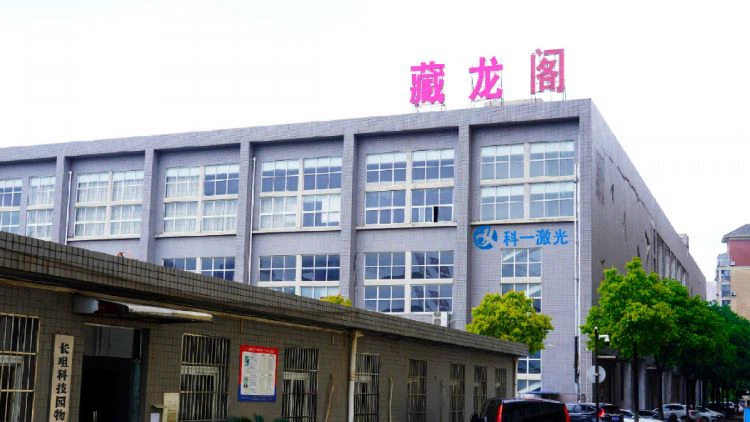
Our Factory
Based on the principle of "quality and service is foundation", stick to quality first, service to win. We not only provide users with excellent satisfying equipment, but also timely lifetime services, like technical advice and after-sales service, which gain us a high reputation among users. With the knowledge economy marching forward, we sincerely hope to cooperate, innovate, and develop with you hand in hand!

FAQ
Q: What are the main components of a laser system?
Q: How do laser tubes work?
Q: What kind of power supply is required for a laser system?
Q: Do I need special mirrors for a laser system?
Q: What kind of lens should I use for my laser system?
Q: What is the role of the control system in a laser system?
Q: Why is a cooling system necessary for a laser system?
Q: What is a laser source?
Q: What are laser optics?
Q: What is a power supply in laser equipment?
Q: What is a control system in laser equipment?
Q: What is a cooling system in laser equipment?
Q: What are the most important factors to consider when selecting laser equipment parts?
Q: What types of parts do laser equipment typically need?
Q: Where can I find replacement parts for my laser equipment?
Q: How often do laser equipment parts need to be replaced?
Q: Can I perform repairs or replacement of laser equipment parts myself?
Q: What is a cooling system in laser equipment?
Q: What is a control board in laser equipment?
We're professional laser equipment parts manufacturers and suppliers in China, specialized in providing high quality customized service. We warmly welcome you to wholesale laser equipment parts made in China here from our factory. For price consultation, contact us.
cnc laser cutting machine acrylic wood mdf, Portable luggage suitcase model Laser Cleaner trunk Dust Laser, Jewelry Laser Welding Machine